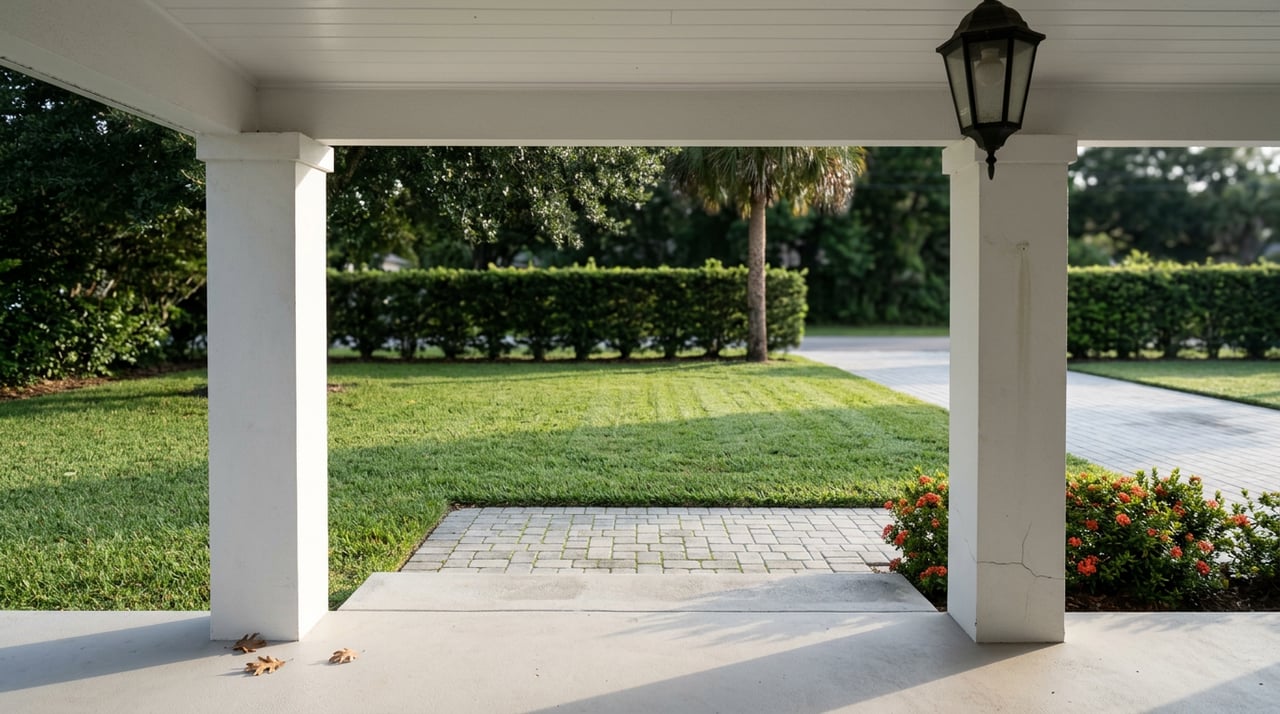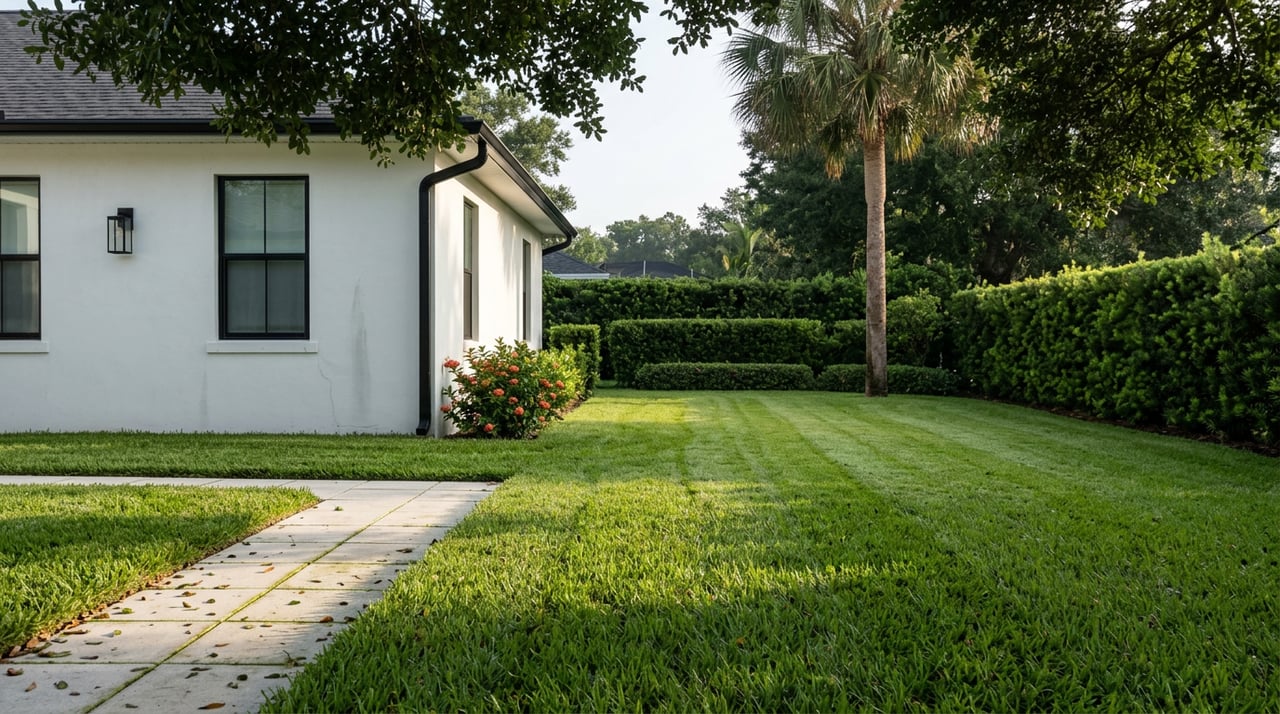
Two listings, same week, same general price range. One sits in a platted subdivision near I-4, city water and sewer already run to the lot line, roughly 1,800 square feet on a standard suburban parcel. The other is a few acres on the edge of town, unplatted, with a well and a septic tank doing the work city utilities do everywhere else. On paper they compete for the same buyer. In practice they are two different financial commitments, and the difference has nothing to do with square footage.
Buyers touring Plant City's outer edges often assume the well-and-septic question is temporary, that city sewer is expanding and their street is next in line. It's a reasonable guess. It's also wrong for most of Plant City, and knowing why changes how you should evaluate that acreage listing before you write an offer.
The assumption worth checking before you write an offer
Hillsborough County does run an active septic-to-sewer conversion program. It's real, it's funded, and it's converting hundreds of homes off septic tanks and onto the county's central sewer system. But look at where the money is actually going: the county's current project areas are the University Area between Fowler Avenue and Bearss Avenue, plus sections of Ruskin and Wimauma. The University Area phase alone covers roughly 1,300 residential dwellings, and county planners have named Ruskin's Area A and Wimauma's Area 1 as the first to convert.
Plant City isn't on that list. That doesn't mean it never will be. It means that if you're buying a well-and-septic home here today, you should treat septic ownership as a permanent condition of the property, not a temporary inconvenience waiting on a government hookup. Budget, inspect, and negotiate accordingly, because the calculus changes if you're expecting someone else to solve this for you in five years.
Why the ground under Plant City matters more than it looks
Septic performance isn't uniform across Florida, and Plant City's geography puts it in a specific category. The soil here is predominantly sandy, which drains well and is generally favorable for septic systems, but that same sandy composition also lets contaminants travel more easily through the ground, which means drain fields need careful design and placement rather than a one-size-fits-all installation.
Add the water table. Parts of Plant City, particularly areas near Turkey Creek, Trapnell Branch, and the Hillsborough River basin, deal with high groundwater levels that affect how a septic system performs, especially during Florida's rainy season. A system that runs fine in a dry spell can back up or surface after a few weeks of summer storms if the drain field was sited without accounting for that seasonal swing.
This is also why age matters more than it might elsewhere. Local septic contractors who work this market note that many older homes near downtown and in the surrounding agricultural areas are still running on aging systems, and a growing number of Plant City parcels are transitioning from agricultural use to residential use, which means the septic system on the property may have been sized for a very different kind of use than the one you're planning.
What a real septic inspection actually checks
Here's the part that catches buyers off guard: the septic check that comes bundled with a standard home inspection is usually a limited visual pass. The inspector runs some water, flushes the toilets, and looks for standing water near the tank. That catches obvious failures. It misses the expensive ones.
Averett Septic Tank Co Inc., a contractor serving Polk and eastern Hillsborough County with more than 50 years in the business, points out that this kind of pass "might not tell you enough" compared to a full real-estate-grade evaluation. That fuller inspection checks tank sizing against current household use, confirms the physical location of the tank and drain field, estimates how many years both have left, flags whether the tank is due for pumping, and notes any landscaping that could be stressing the system.
Before you go under contract on a well-and-septic property, ask for this instead of assuming the standard inspection covers it:
- Confirmation of tank size relative to the home's current bedroom count and water use, not just the size it was permitted for originally
- A physical location record for the tank and drain field, so you know what you can and can't build near later
- An estimate of remaining lifespan for both the tank and the drain field, not just a pass or fail on the day of inspection
- A note on whether the system is due for pumping now or within the next year
- Flags on any landscaping, additions, or paving that could be stressing the drain field
What a sewer conversion actually costs, if you ever want out
Some buyers decide they'd rather convert to public sewer down the line if a connection ever becomes available nearby, or simply want to understand what they're trading for the acreage and privacy of a well-and-septic property. National cost guides put a typical residential septic-to-sewer conversion at $5,000 to $15,000 in 2026, depending on how far the house sits from the sewer main.
| Cost component | Typical range (2026) |
|---|---|
| Sewer connection fee | $1,000 – $5,000 |
| Sewer line installation (house to street) | $2,000 – $7,000 |
| Septic tank decommissioning | $500 – $2,000 |
| Permits and inspections | $200 – $1,000 |
| Landscaping restoration | $500 – $2,000 |
These are national figures, not Plant City-specific quotes, so treat them as a planning range rather than a bid. But they're useful context for why most homeowners on well and septic don't convert voluntarily. The math only works in your favor if a sewer main is already close to your lot line, and for most of Plant City, county maps don't have one scheduled to arrive.
What the price gap between neighborhoods actually buys
This is where the well-and-septic question becomes a pricing question, not just a maintenance question. Inside Plant City's platted subdivisions, homes on city water and sewer tend to run in familiar bands. Walden Lake, close to I-4, is known for single-story homes in the $300s running near 1,800 square feet. New construction in Mill Creek Estates typically starts in the upper $500s, with larger lots near 2,100 square feet. The Farm at Varrea, a D.R. Horton townhome community, lists in the $300s.
Move outside those platted communities to the unplatted acreage that surrounds Plant City's agricultural edges, and the math shifts. You're often paying for land and privacy rather than square footage, and the well and septic system is part of the deal, not a deduction from it.
Across the broader Plant City market, the numbers show real room to negotiate on either type of property right now. Redfin's tracking of closed sales over the three months ending May 2026 puts the median sale price at $337,000, down 4.7 percent from the same period a year earlier, with those sales closing in a median of 46 days once listed. Zillow's home value index put the average Plant City home at $343,765 as of mid-2026, down 2.0 percent over the past year. Current active listings tracked in August 2026, meanwhile, carried a median list price of $399,000, sitting on the market for a median of 93 days, a pace unchanged from August 2025.
Those two day-on-market figures measure different things. Redfin's 46-day number reflects how fast homes that already sold moved once listed. The 93-day figure reflects how long today's active listings have been sitting, unsold, at this snapshot. Read together, they suggest homes priced correctly out of the gate are still moving in under two months, while overpriced listings linger far longer. A list price near $399,000 against a sold median near $337,000 tells the same story: sellers are testing high, and buyers who show up with a clean, documented septic inspection have real leverage to close that gap, whether the property is a platted subdivision home or a well-and-septic acreage parcel.
The financing wrinkle nobody mentions at the open house
If an inspection turns up a septic system that needs real work, don't assume the county will help cover it. Hillsborough County does not currently offer a cash-grant subsidy program for septic upgrades outside its designated conversion zones. USDA Rural Development programs may help some rural homeowners with system repairs or replacement, but eligibility depends on your specific address and current program status, so this is worth verifying directly before you count on it as part of your budget.
Common questions from Plant City buyers
Does a septic system hurt resale value here? Not inherently. Well-and-septic ownership is common on Plant City's agricultural edges, and buyers who want acreage expect it. What affects resale is documentation. A home with a recent, thorough septic evaluation on file gives future buyers confidence the system is sound, the same way a recent roof certification does.
How do I find out if my target address is in a future sewer conversion zone? Hillsborough County publishes its current and proposed septic-to-sewer project areas, including the University Area, Ruskin, and Wimauma phases, through its own utilities department. Checking that list before you assume a future hookup is worth the ten minutes it takes.
Is a septic inspection required, or optional? It isn't automatically bundled into every home inspection in the way a roof or HVAC check is. If your inspector's scope only includes a limited visual pass, that's the moment to ask for a dedicated real-estate septic evaluation as a separate line item, particularly on any property near Turkey Creek, Trapnell Branch, or the Hillsborough River basin where the water table runs high.
If you're comparing a subdivision home on city sewer against a few acres on well and septic, the numbers on the surface won't tell you which one actually fits your budget five years from now. That's a conversation worth having before you write an offer, not after an inspection report lands in your inbox. Reach out to The Key Is Nikii and let's walk through what a specific Plant City property, septic system and all, really means for your next move.