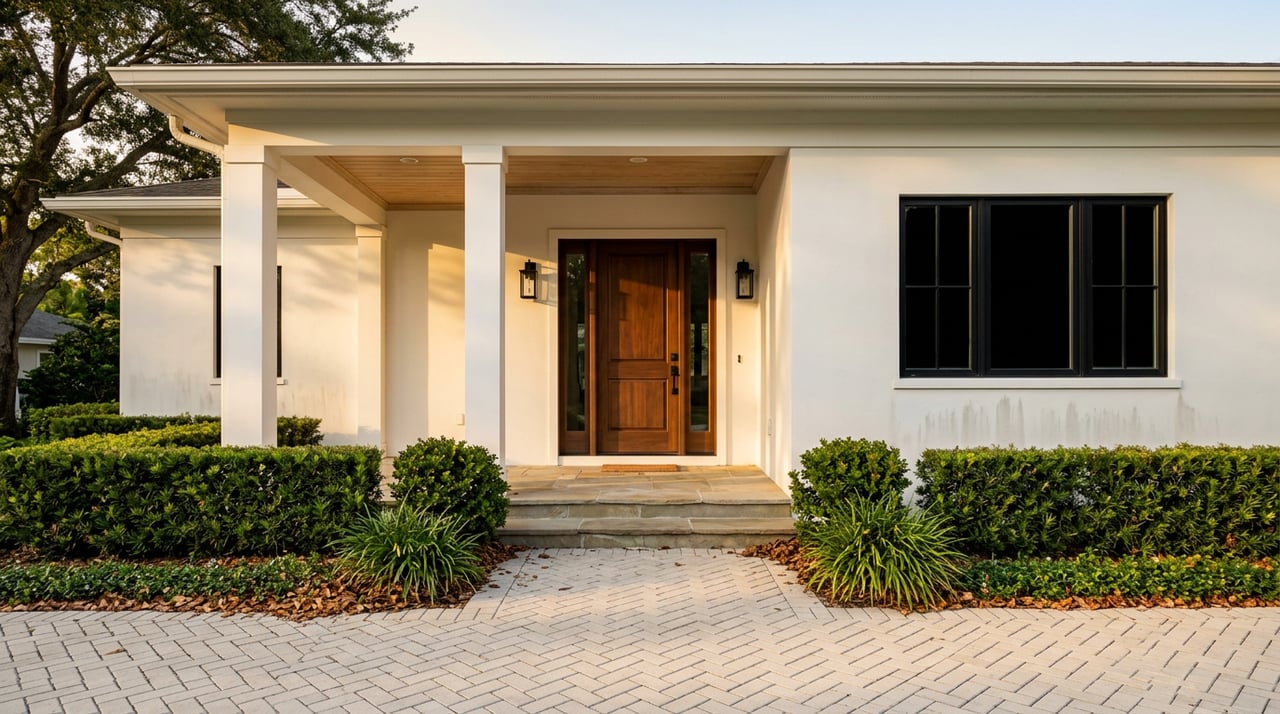
A buyer touring Wimauma this fall can walk out of two model homes an hour apart with nearly identical numbers on the sign out front and then get two very different figures on the closing disclosure two months later. Same square footage, same builder tier, same $370,000 price range. The gap shows up as a line item most buyers never asked about during the tour: the Community Development District assessment, and specifically how much of that district's bond debt is still outstanding.
The instinct is to treat a CDD fee like an HOA due, a flat cost that comes with the neighborhood. It isn't. A CDD assessment is a government bond repayment with a start date and an end date, and where a given community sits on that timeline has almost nothing to do with how new the houses look. It has everything to do with when the district was created and how much infrastructure it financed. In Wimauma right now, that timeline varies by decades between neighborhoods sitting a few miles apart, and it is the actual reason two similarly priced homes can carry monthly costs $100 to $250 apart.
The clock every CDD starts on day one
A Community Development District issues tax-exempt bonds to build the roads, water lines, stormwater systems and amenity centers before the first home closes. Homeowners then repay that debt through two separate charges bundled into one non-ad valorem assessment on the property tax bill.
The first is the bond, or debt service, assessment. It is fixed for the life of the bonds, typically structured over 20 to 30 years, and it disappears entirely once the debt is retired. The second is the operations and maintenance assessment, which pays for landscaping, pond upkeep, insurance and management. That portion never goes away and is reset by the district's board every year.
This matters because a district in year two of a 30-year bond and a district in year twenty-five of the same term can carry wildly different fees for infrastructure that, from the street, looks the same. The amenity center, the entry sign, the paver roads all cost the same to build. What differs is how much of that construction debt still has to be paid off, and by whom.
Berry Bay just reset its clock
Wimauma's Berry Bay community is a useful example because it is actively creating new districts in real time. Hillsborough County commissioners approved the roughly 506-acre Berry Bay III CDD in January 2026, with planned infrastructure estimated at $90.95 million covering roads, utilities, stormwater facilities and amenities. That district's current plan anticipates 1,389 detached homes, with zoning that allows for as many as 1,600 attached or detached homes.
Berry Bay III is the third district layered onto a community that keeps expanding. The original Berry Bay CDD covers about 474 acres and an anticipated 1,145 homes, and Berry Bay II spans roughly 636 acres with plans for 1,605 homes. Overall, Berry Bay sits on approximately 1,100 acres and is expected to reach at least 3,200 single-family homes once fully built, with 379 homes already sold and 969 developed and platted lots according to the community's own district records.
The developer, Eisenhower Property Group, filed plans with the Southwest Florida Water Management District on September 21, 2026 for a seventh phase adding 436 more homes on about 178 acres near Saffold Road, according to the Business Observer. Eisenhower, founded in 2004 by Jeffery Hills, now has more than 25,000 residential lots under development across dozens of communities, and Berry Bay is one of two active Wimauma projects for the company, alongside Balm Grove east of I-75.
None of this makes Berry Bay a bad buy. It means a buyer closing on a home in one of Berry Bay's newer phases is stepping into a district whose bonds were issued recently, sometimes within the current year, and that debt has 20 to 30 years left to run. The assessment on that home reflects a nearly full bond balance, not a nearly paid one.
Older districts are further along a different debt
Ayersworth Glen sits on the opposite end of that same timeline. The community's original HOA was established in 2006, with a later section, Ayersworth Glen 3A, established in 2015 and covering 227 homes. Both fall under the Highlands Community Development District, a unit of local government created under Florida law that financed the community's roads and amenity center through the same kind of tax-exempt bonds Berry Bay III is issuing now.
Florida CDD guides commonly cite Ayersworth Glen as an example of a community where the bond portion of the assessment has been substantially paid down, leaving residents responsible mainly for the smaller operations and maintenance charge rather than the full combined fee. That distinction is worth confirming for any specific address, since it changes what a buyer is actually paying every month for infrastructure that, on the surface, looks similar to what a brand new district just financed.
Southshore Bay falls somewhere in the middle. Its CDD assessments have been estimated in the range of $1,200 to $1,800 a year, and its homeowners association has published quarterly dues in the $225 to $236 range in recent fiscal years. Combined, that puts total monthly carrying cost from CDD and HOA fees alone somewhere between $175 and $275, on top of the mortgage, tax and insurance a lender already quotes.
| Community | District status | What it means for a buyer |
|---|---|---|
| Ayersworth Glen (Highlands CDD) | Established 2006; frequently cited as a community with bonds substantially paid down | Assessment likely closer to O&M only, but confirm per address |
| Southshore Bay | Active CDD with published annual assessments and quarterly HOA dues | Estimated $175 to $275 combined monthly, per current published fee sheets |
| Berry Bay III | CDD approved January 2026; $90.95 million in planned infrastructure | Bond term just beginning; assessment reflects a nearly full 20 to 30 year balance |
What actually shows up on your closing disclosure
The CDD assessment appears on the Hillsborough County property tax bill as a non-ad valorem charge, which means your lender escrows it the same way they escrow property taxes and insurance. It raises your monthly payment and it counts against your debt-to-income ratio during underwriting, the same as any other recurring housing cost.
Florida law requires a bold-type disclosure statement in the original sales contract for any home sold directly by the developer within a CDD, under Section 190.048 of the Florida Statutes. That requirement does not carry over to a resale. If you are buying a home that already changed hands once inside Berry Bay, Southshore Bay or Ayersworth Glen, confirming the current assessment is on you and your agent, not on a form the seller is required to hand you.
Wimauma's broader market gives buyers some room to ask these questions before signing anything. The median sale price sat at $343,000 over the three months ending in August 2026, down slightly from the same period a year earlier, with homes selling in a median of 64 days compared with 76 days the year before and monthly sales volume down from 132 to 108 year over year. That is a market with less urgency than it had a few years ago, which means there is time to request the numbers that matter before writing an offer, not after.
The question to ask before you write an offer
Three steps confirm the actual number for a specific address rather than a community-wide estimate. Request an estoppel letter from the district's manager, which outlines the outstanding bond balance and the current annual assessment for that lot. Check the district's own website, since most CDDs publish budgets and board meeting minutes that show where the bond stands. And have your title company confirm during the title search, since any CDD lien attaches to the property and shows up there regardless of what a listing sheet says.
None of these steps take more than a phone call or an email, and none of them depend on the builder's sales office, which represents the builder's interests during that first walkthrough, not yours.
Common questions about Wimauma's CDD fees
Does every community in Wimauma have a CDD? No. Rural acreage and some non-master-planned parcels outside the newer developments do not carry a district assessment, though most of the amenity-rich master-planned communities built in the last two decades do.
Can I pay off a CDD bond assessment early? The bond portion can typically be prepaid in a lump sum by contacting the district manager for a payoff figure. It usually costs tens of thousands of dollars upfront, and the benefit is smaller if you plan to sell before the bond term would have ended anyway.
Does the CDD fee ever disappear completely? Only the bond portion goes away, once the underlying debt is retired. The operations and maintenance assessment continues indefinitely and is reset annually by the district's board.
If you are comparing two Wimauma communities and the assessments do not match what a builder's calculator showed you, that is worth a conversation before you get further into a contract. The Key Is Nikii will pull the actual bond balance and current assessment for any specific address you are considering, so the number you plan around is the one that shows up on your first tax bill, not an estimate from a model home.